FAQs
What is a prosperity region?
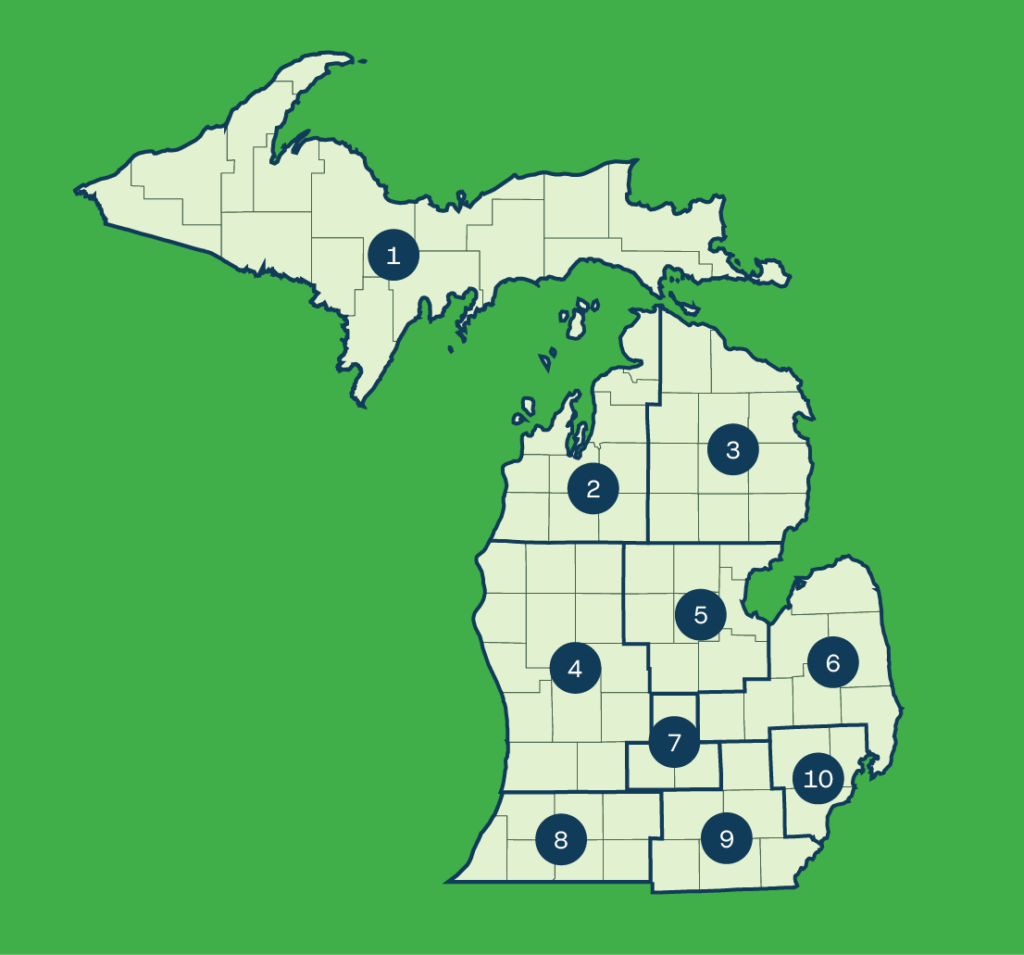
Michigan is divided into 10 prosperity regions, which are groups of neighboring counties created by the state to align resources, planning, and data. These regions make it easier for policymakers, nonprofits, and community partners to understand local needs, compare trends across the state, and target resources where they are most effective.
What are duplicated and unique counts?
In this study, duplicated counts reflect the total number of visits, including repeat visits by the same person, while unique counts reflect the number of different individuals who received assistance.
What is the Food Bank Council of Michigan, food banks, pantries, and how do they operate?
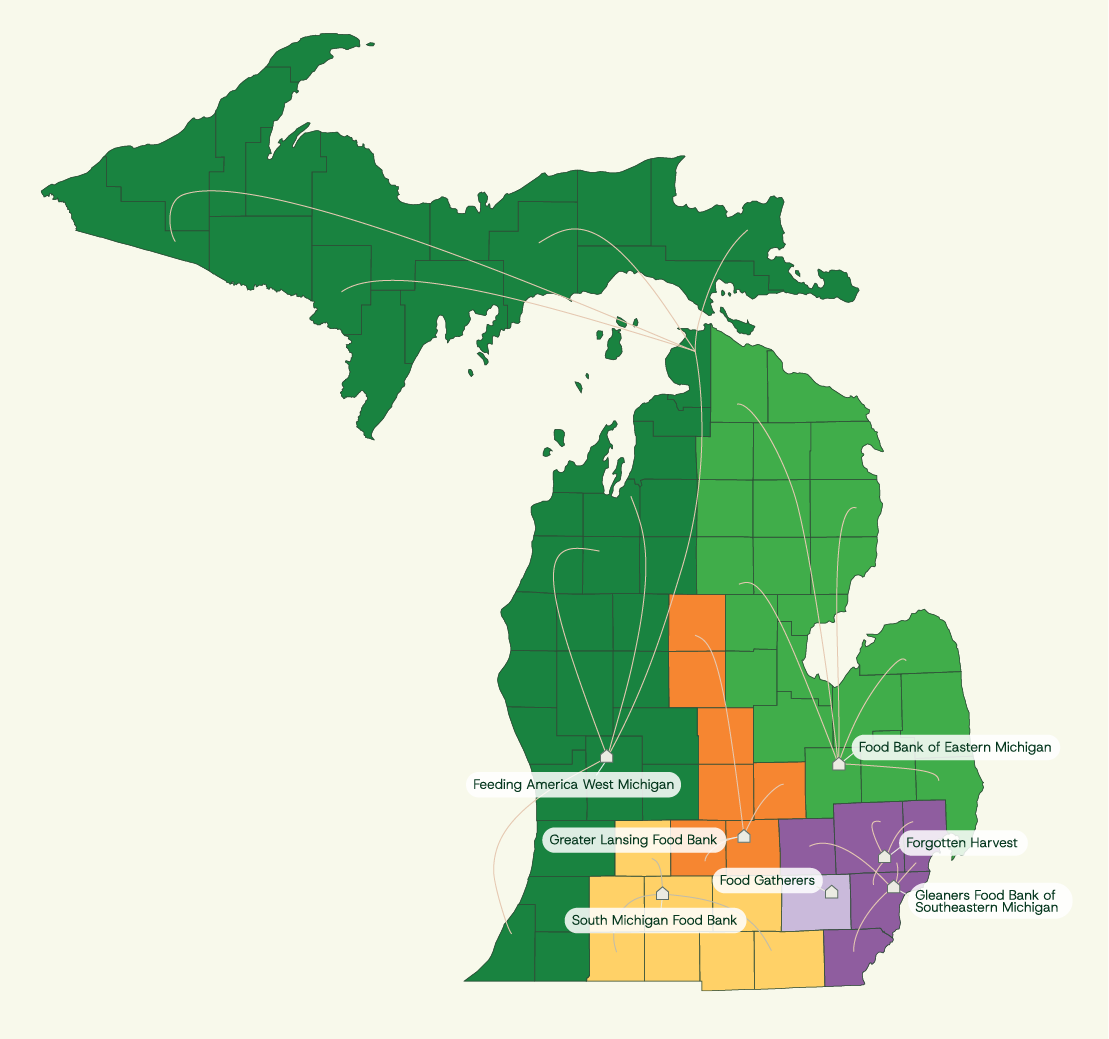
The Food Bank Council of Michigan (FBCM) connects and supports seven regional food banks as their state trade association, all of which are part of the national Feeding America network. Beyond coordination, FBCM strengthens the state’s food system by administering state and federal grants, managing large-scale food purchasing with Michigan farmers and suppliers, and advancing statewide initiatives that expand access to nutritious food.
Food banks are large-scale warehouses with defined service regions. Based on their region, some member food banks have supporting distribution warehouses. With FBCM’s support, they source food from farmers, grocery retailers, manufacturers, government programs, and community donations, and may also purchase food using private or public funding. Food banks use their partner agencies and community meal sites to distribute these foods throughout their region.
Partner agencies such as food pantries and community meal sites “shop” their regional food bank or warehouse to acquire food for their programs and services. These smaller, community-based locations distribute food directly to people experiencing food insecurity. Food distributed from the agencies are acquired through a combination of regional food banks, local donations and direct purchases.
Mobile pantries extend this reach by bringing food directly into neighborhoods with limited access to traditional food pantries. Operated by regional food banks in partnership with local community organizations. Mobile pantries provide fresh produce, dairy, proteins, and pantry staples at convenient community locations, often on a regular schedule that gives families a reliable way to access food in areas without a permanent pantry.